
Experiencing dental discomfort can be a stressful ordeal, especially when you aren’t sure which treatment is necessary to resolve the issue.
Most tooth damage falls into two categories: minor decay that requires a simple restoration or significant structural loss that necessitates more comprehensive protection.
Visiting a dental office in Forest Lake is the best way to get a definitive diagnosis, as modern imaging can reveal the exact extent of the damage beneath the surface of your enamel.
What Is The Difference Between A Filling And A Crown?
The primary difference between these two treatments is the amount of tooth structure they replace.
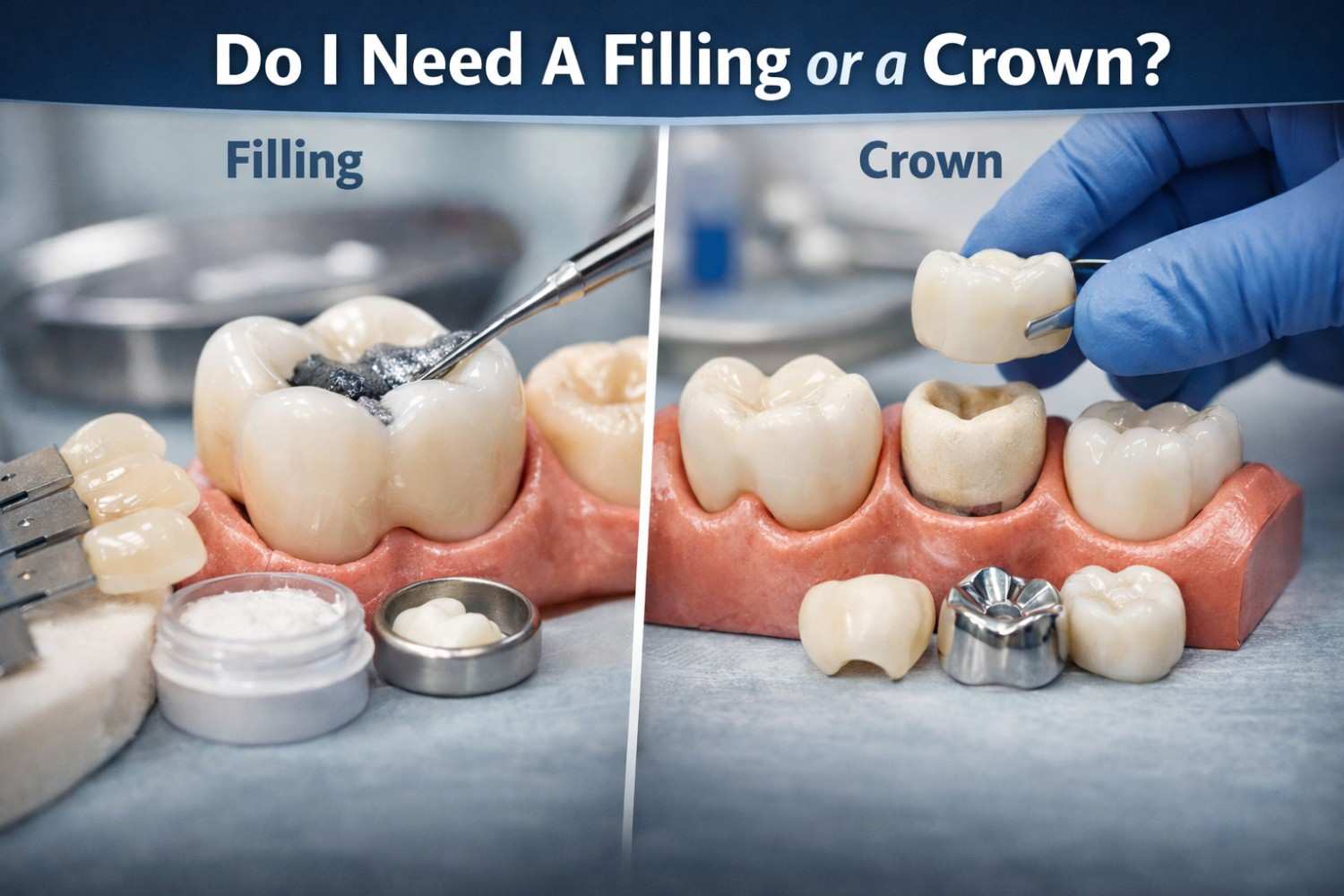
A filling is used when a cavity is small to moderate in size, and the surrounding tooth walls are still strong enough to support the pressure of chewing.
If you are looking for dental fillings near you, you will find that composite resin is the most popular choice because it bonds directly to the tooth and matches its natural color.
However, when a tooth is fractured, has a very large old filling, or has undergone a root canal, a filling is no longer sufficient to hold the tooth together.
When Do Clinicians Recommend A Crown Over A Filling?
A dental professional will recommend a crown when the structural integrity of the tooth is compromised. Think of a filling like a “plug” for the whole, whereas a crown is the “cap” that will cover the entire visible portion of your teeth.
By encasing the tooth, a crown prevents it from splitting apart under pressure. This is essential for back molars that handle heavy grinding forces.
If more than 50% of the natural tooth structure is missing due to decay or trauma, a crown is almost always the safer long-term choice to avoid a future extraction.
What Are The Different Types Of Dental Crowns And Prices?
When discussing your restorative options, it is helpful to understand the various types of dental crowns and prices associated with them.
Porcelain-fused-to-metal (PFM) crowns offer great strength and have been a standard for decades, typically ranging from $800 to $1,500.
All-ceramic or porcelain crowns are the most aesthetic choice for front teeth and fall into a similar price bracket.
Zirconia is a newer, incredibly durable material often preferred for patients who grind their teeth, with costs occasionally reaching up to $2,000 depending on the complexity of the case.
How Does Insurance Coverage For Dental Crowns Work?
Navigating the financial aspect of dental care is a common concern for several patients.
Insurance coverage for dental crowns falls under the category of a major restoration, which means several plans will cover about 50% of the total cost after the deductible is met.
Fillings, conversely, are usually considered “basic” services and are often covered at a higher rate, such as 80%.
It is important to have your dental team send a pre-authorization to your insurance provider to get a clear estimate of your out-of-pocket responsibility before the procedure begins.
How Can You Tell If Your Tooth Is Failing At Home?
While only a dentist can give a final verdict, there are signs you can watch for. Sensitivity to cold that lingers for more than a few seconds often suggests a deep cavity that might still be solved with a filling.
However, sharp pain when biting down or a visible crack in the enamel are classic indicators that the tooth is flexing and requires the 360-degree support of a crown.
If a piece of your tooth has actually broken off, it is a clear sign that a filling will likely fail and a more permanent restoration is needed.
Comparison of Fillings vs. Crowns
| Feature | Dental Filling | Dental Crown |
| Primary Use | Small cavities/minor decay | Fractures/large decay/root canals |
| Procedure | Completed in one visit | Usually requires two visits |
| Durability | 5–10 years | 10–15+ years |
| Tooth Preservation | Preserves most enamel | Requires reshaping the tooth |
Restoring Your Oral Health
Choosing the right restoration is vital for the longevity of your smile. Whether you need a quick repair or a durable protective cap, taking action early prevents more complex and costly problems in the future.
Modern dentistry ensures that whichever path you choose, the result will be functional and natural-looking.
At Forest Lake Family Dental, we are committed to providing honest, expert guidance to help you make the best decision for your health. Our team utilizes advanced technology to ensure your restorations fit perfectly and last for years.
If you are experiencing tooth pain or are overdue for a checkup, contact our office today to schedule your consultation.
FAQs
How long does it take to get a crown?
The process typically takes two appointments: one to prepare the tooth and take impressions, and a second to cement the permanent crown.
Can a crown replace a filling later?
Yes, many patients eventually transition to a crown when an old filling fails or the surrounding tooth structure weakens over time.
Does getting a crown hurt?
The tooth is thoroughly numbed during the preparation phase, so you should feel no pain, only some pressure during the procedure.
What happens if I ignore a tooth that needs a crown?
The tooth will likely continue to fracture, which can lead to severe pain, abscess, or the need for a total extraction.